
Recall Campaigns Built on Clean Data & Smarter Targeting
Turn open recalls into service appointments with validated ownership and the right outreach strategy.
The Aging Vehicle Gap
Recall Completion Falls as Vehicles Age
New vehicles see strong recall completion. Once they age past warranty, most open recalls simply go unrepaired.
New vehicles
recall completion rate
Mostly handled under warranty
5–10 years old
recall completion rate
More than half go unrepaired
Over 10 years old
recall completion rate
Roughly 7 in 10 never come back
71%
Revenue left on the table
Older, out-of-warranty vehicles are the ones most likely to skip their recall — and the ones that generate the most customer-pay maintenance once they're in your service lane. Without proactive recall campaigns, up to 71% of those owners never come back, taking repair orders, upsell opportunities and long-term loyalty to someone else.
Positioning
A Smarter Way to Run Recall Campaigns
Recall campaigns can do more than check a compliance box. When they are built on accurate customer data, validated ownership, and the right outreach strategy, they can help franchised dealers improve customer safety, generate service appointments, increase fixed ops traffic, and reengage customers who may have fallen out of the service cycle.
Dealerwing helps new car dealers identify real recall opportunities, target the recalls they want to drive, reach customers through the right channels, and connect recall outreach to measurable appointment activity. Instead of blasting raw lists, Dealerwing helps dealers build recall campaigns around customers who are more likely to be reachable, in market, and still connected to the affected vehicle.
Ownership Accuracy
A recall campaign only works if the current customer is still connected to the affected vehicle. We validate ownership before you spend a dollar reaching them.
Target Specific Recalls
Build campaigns around the recalls your dealership wants to prioritize, aligned with parts availability, service capacity, and OEM initiatives.
Clear Appointment Path
Drive customers to personalized landing pages, appointment request forms, and tracked phone numbers so response becomes measurable.
Retention, Not Just Compliance
Recall outreach can reintroduce the dealership, restart a lost customer relationship, and uncover additional maintenance needs.
How it works
A process built on validated data
Review the Campaign Objective
Identify the recall campaign goal, priority recalls, audience type, timing, and desired response path.
Build and Validate the Audience
Review customer and vehicle data, ownership accuracy, marketability, duplication, and contact quality.
Choose the Right Channels
Use direct mail, SMS, email, social, landing pages, phone tracking, and BDC support as fits the audience.
Create Campaign-Specific Messaging
Recall outreach should be clear, direct, relevant, and easy for the customer to act on.
Launch and Track Response
Connect campaign activity to calls, forms, appointment requests, and dealership follow-up.
Review Performance and Improve
Use returned mail, bad contact data, and appointment activity to make the next campaign smarter.
Use cases
Recall Campaign Use Cases
Dealerwing recall campaigns can support multiple dealership needs beyond a single compliance mailing.
OEM Recall Campaigns
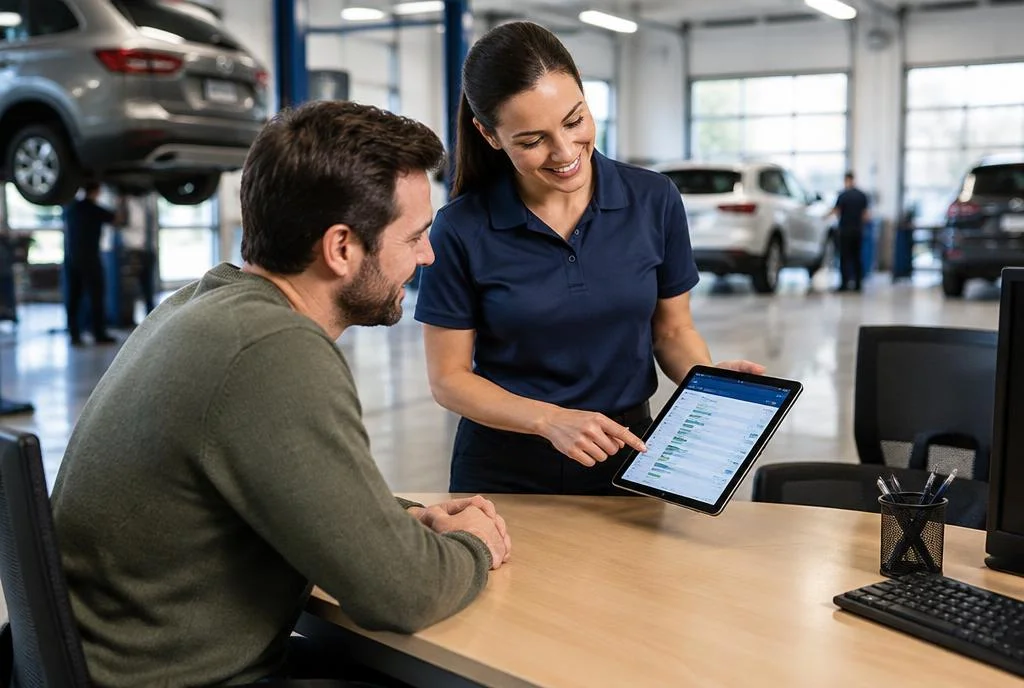
Communicate with customers affected by specific recalls you select.
Prioritize the recalls that matter most to your parts and service capacity instead of one generic blast.
Conquest Recall Campaigns
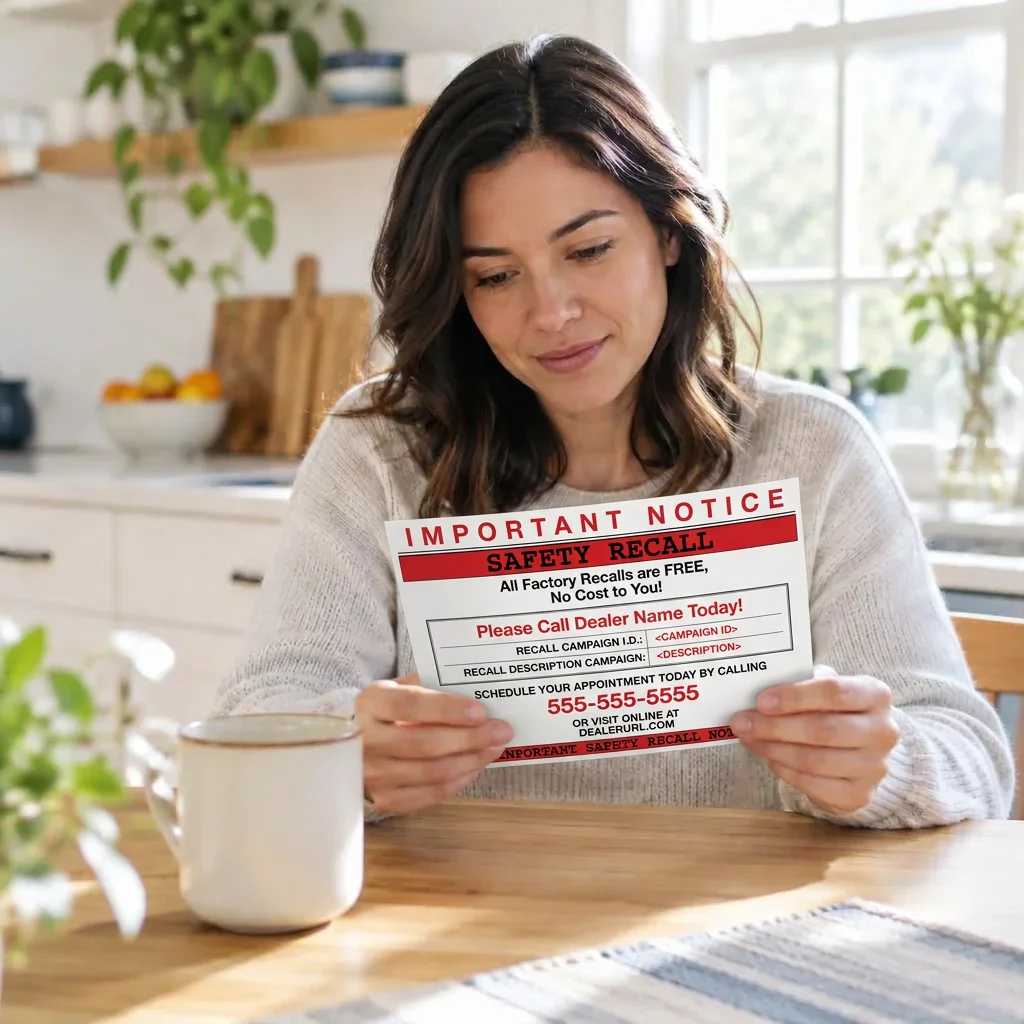
Reach affected owners who don't currently service at your store.
Turn a safety notice into a first service visit and a new relationship with the dealership.
Mobile Service Recall Campaigns
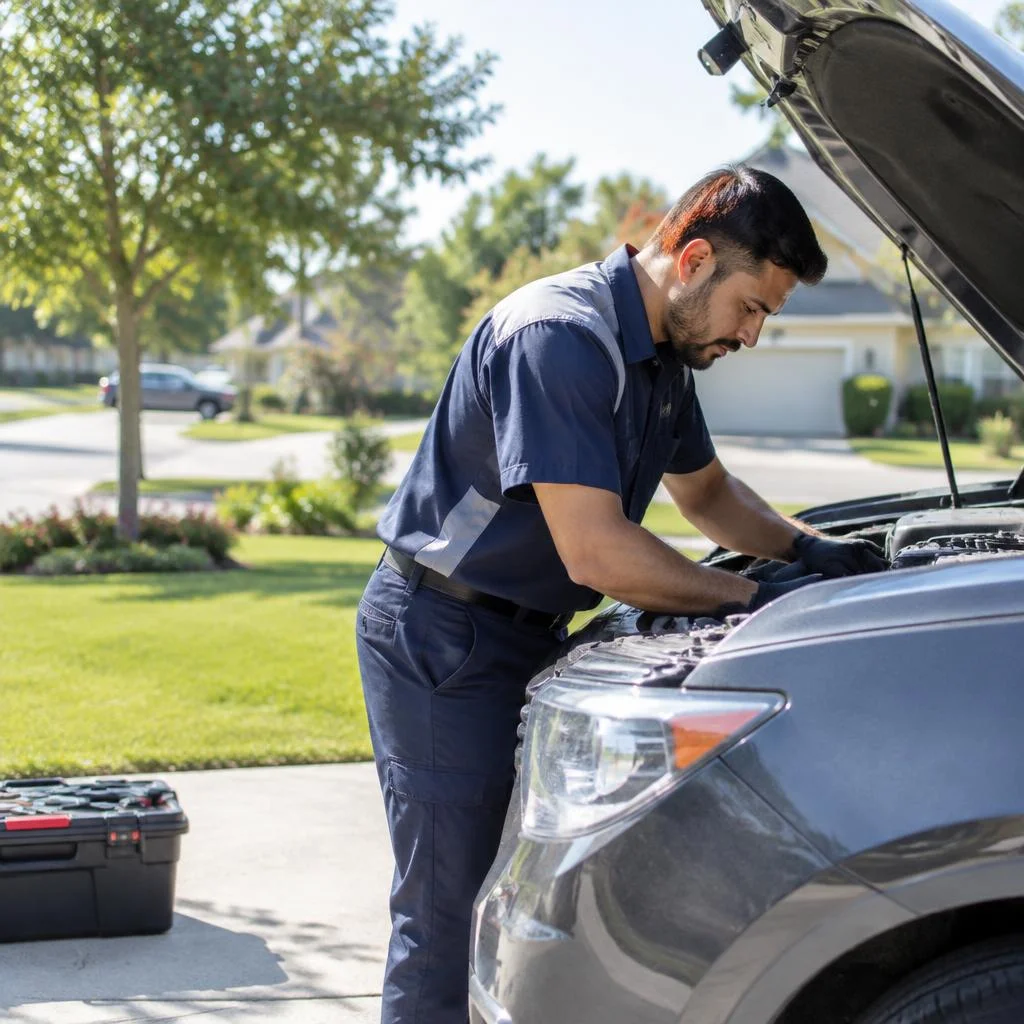
Promote convenience when mobile repair is available.
Highlighting mobile repair options can raise response for dealers with that operational capability.
Deep dive
Why Recall Marketing Needs a Data-First Approach
Explore the research and the process behind a data-first recall campaign.
Recall Marketing Starts With the Right Audience
A recall list is not a strategy. Before you launch, you need to know who owns the vehicle, where they live, how they can be reached, and whether the record is duplicated.
Wrong owner, moved out of market, duplicate DMS records or bad contact data all cost the same way: the message never reaches a customer who can act. Dealerwing validates ownership, reachability and market fit before the campaign goes out.
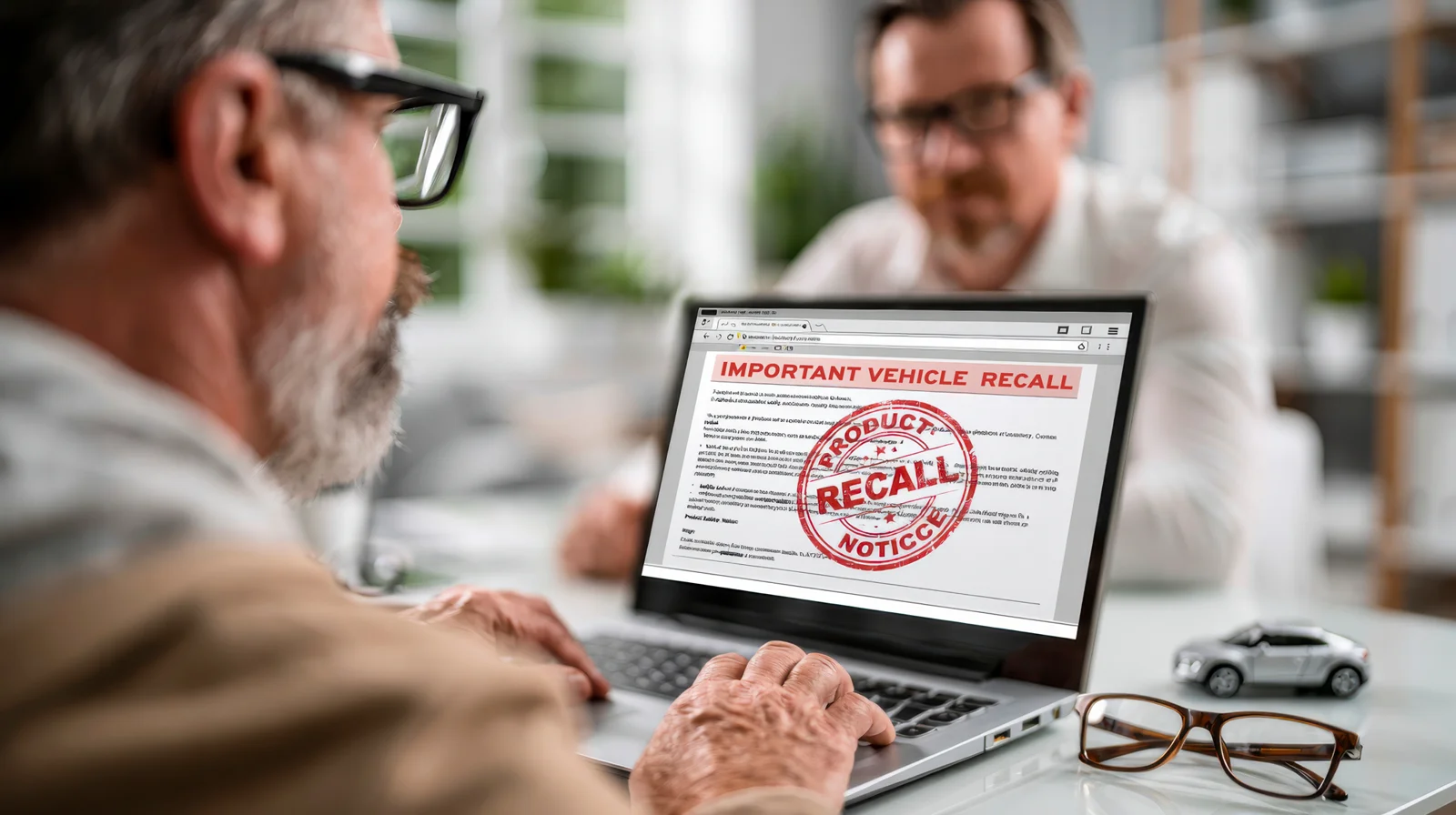
Why Recall Campaigns Matter for Fixed Operations
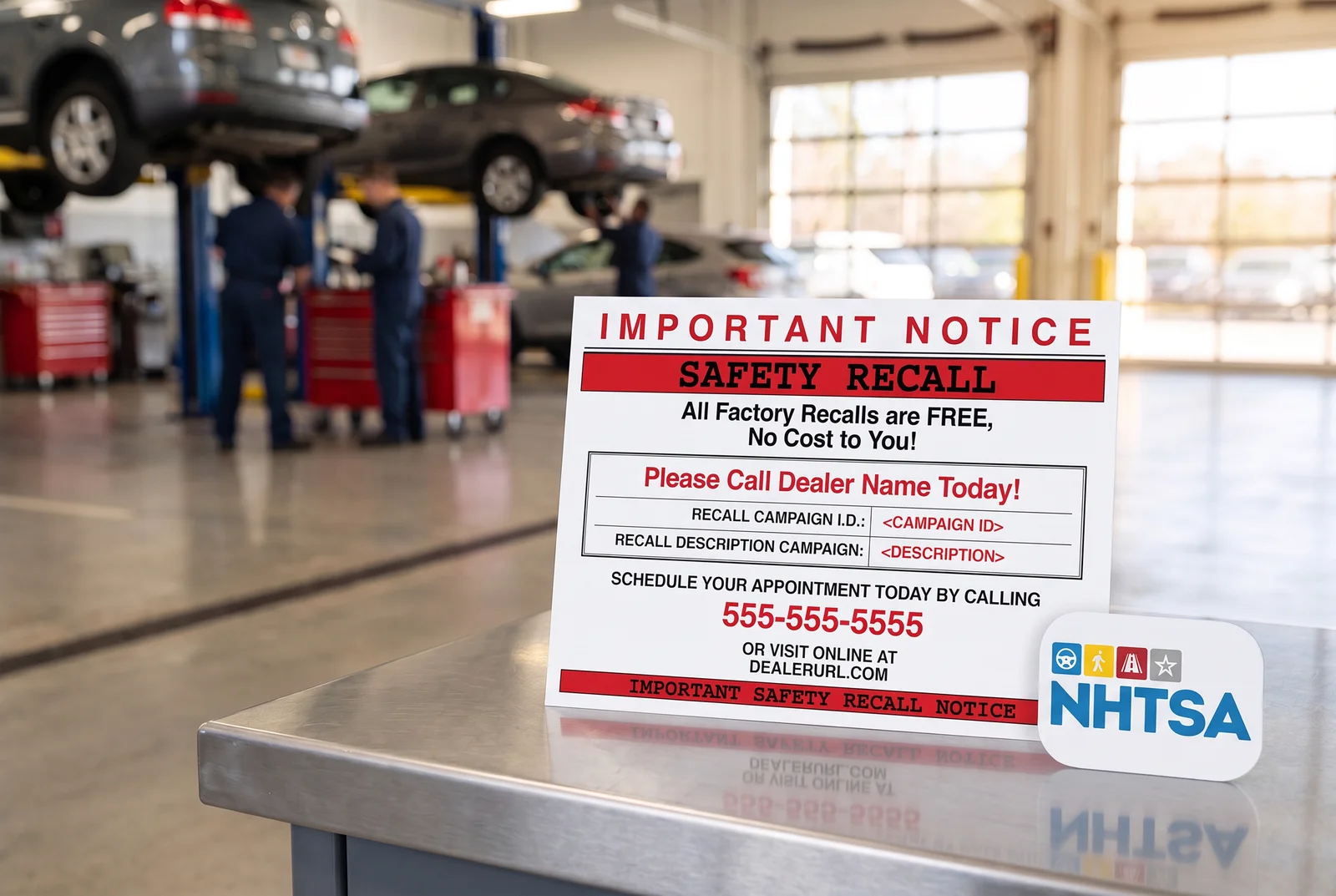
Open recalls are a safety responsibility and a fixed ops opportunity. Customers miss the urgency, forget to schedule, assume the repair takes all day, or don't realize it's free — and some have moved or bought the vehicle used, so they've never heard from your store.
A well-built campaign brings them back into the service drive and restores the relationship. NHTSA points to accurate owner contact data, risk awareness and convenient repair access as what actually drives completion.
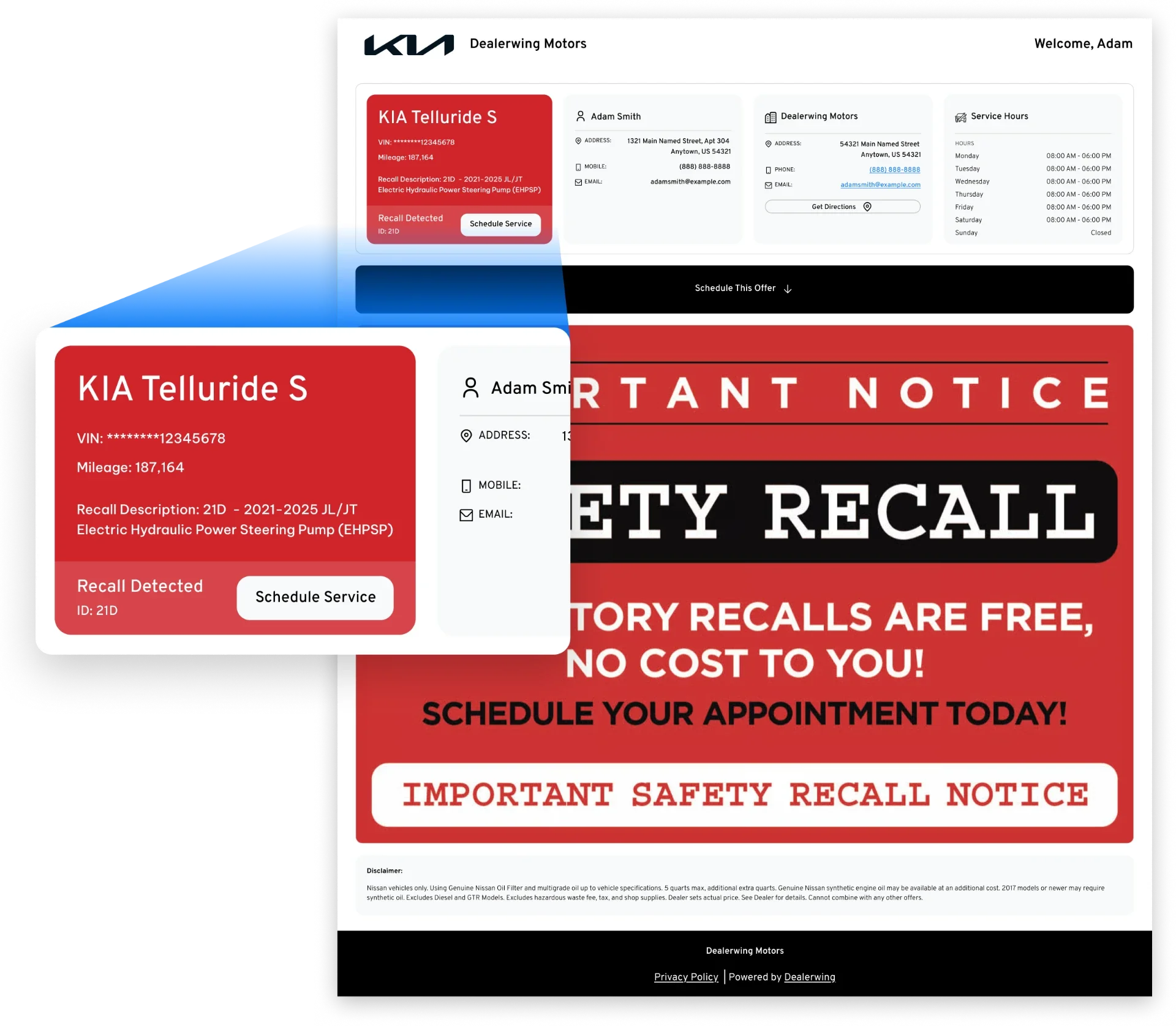
Recall Alerts Built Into Every Customer Landing Page
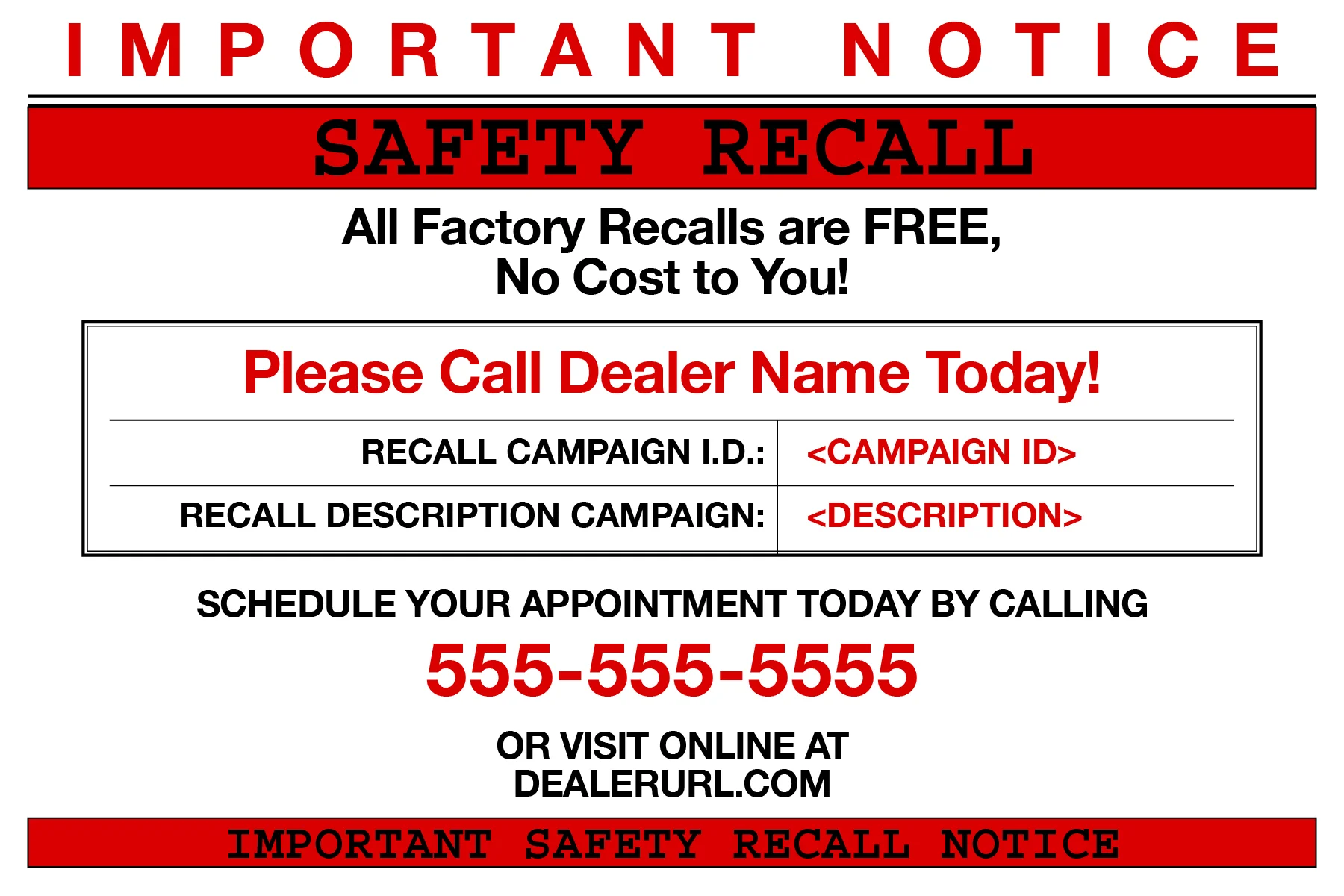
Dealerwing flags open recalls right on each customer's personalized landing page. The alert displays the recall ID and a clear description, so the customer knows exactly what work needs to be done — and that it's free.
No other marketing company has a feature like this in their dashboards. It's one more reason Dealerwing landing pages turn recall campaigns into scheduled appointments.
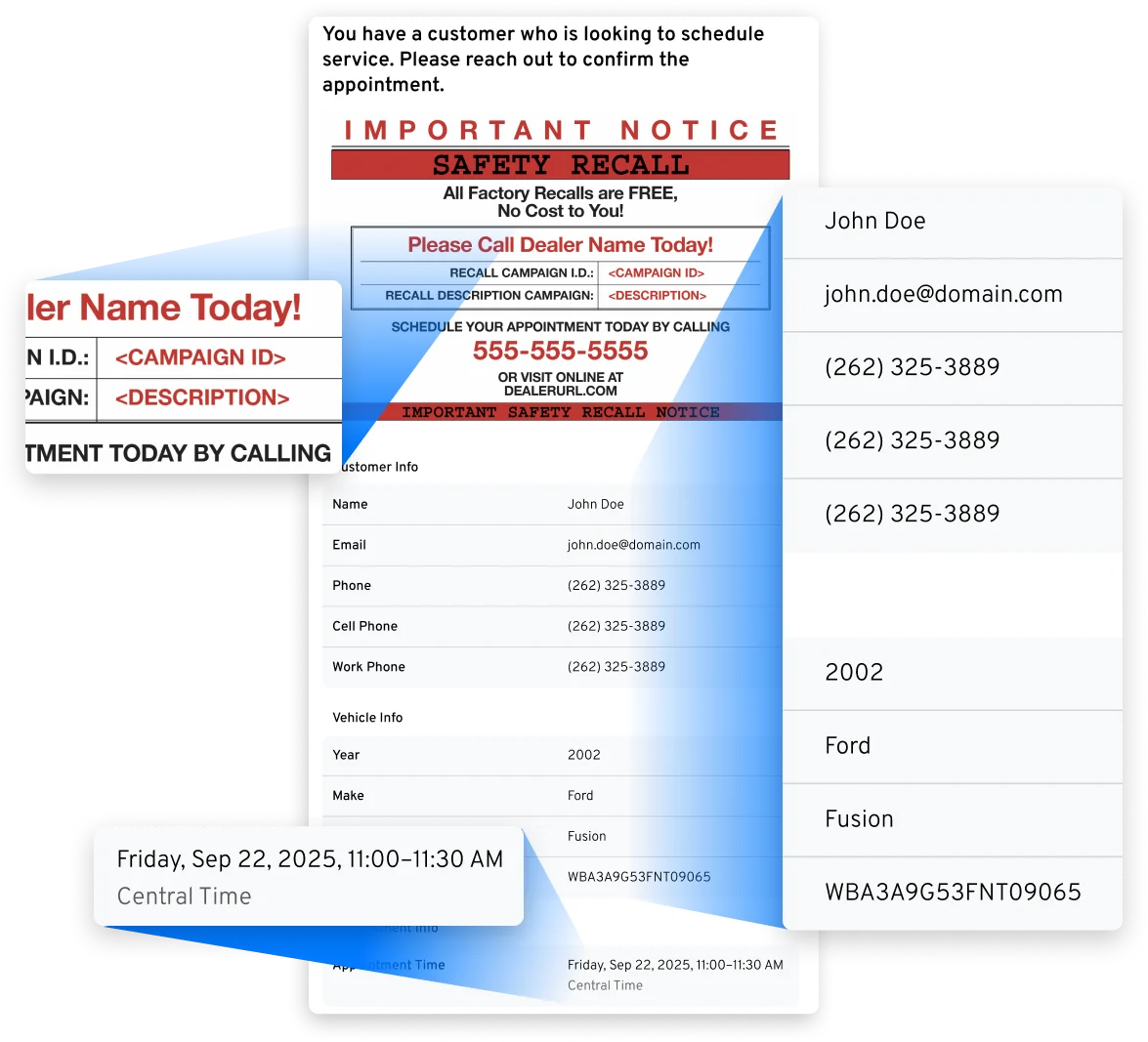
Turn Recall Outreach Into Retention and Appointments
Many recall customers are retention opportunities in disguise: current service customers, lost customers, sold-not-serviced, conquest targets, or owners who bought elsewhere and now live in your market. Outreach can do more than close a repair — it reintroduces the dealership, updates customer information and restarts the relationship.
That only works when responding is easy. Dealerwing sends customers to personalized landing pages with campaign-specific messaging, appointment request forms and clear contact details, then tracks calls and submissions so follow-up is measurable.
Recall Campaigns: One of the Sharpest Tools in Our Toolbox
The toolbox holds OEM recalls, conquest, mobile service, lost customer, sold-not-serviced and parts planning. Each one runs on validated ownership records and vehicle data, so you reach real recall opportunities instead of guessing who to contact.
Pick the tool that fits the moment. Targeting, timing and measurement come with it, so the right customer gets the right message while the recall is actionable.
FAQ
Common questions
If these questions are not being answered, the campaign may be built on assumptions instead of real opportunity.
What are dealership recall services?
Dealership recall services help franchised new car dealers identify customers with open recalls, build targeted outreach campaigns, and create appointment opportunities for recall repairs.
Why does ownership accuracy matter in recall marketing?
Ownership accuracy matters because a recall campaign only works if the current customer is still connected to the affected vehicle. If the original buyer no longer owns the vehicle, the campaign may be targeting the wrong person.
Can recall campaigns target specific recalls?
Yes. Dealerwing recall campaigns can be built around the recalls a dealership wants to prioritize, helping the store align outreach with parts availability, service capacity, OEM initiatives, and fixed ops goals.
What channels can be used for recall campaigns?
Recall campaigns can use direct mail, SMS text messaging, email, social media, personalized landing pages, phone tracking, appointment request forms, and BDC follow-up depending on the campaign strategy.
How does Dealerwing help reduce wasted recall marketing spend?
Dealerwing helps improve campaign quality by focusing on cleaner data, ownership validation, duplicate record reduction, out-of-market suppression, valid contact information, and more relevant audience segmentation.
Can recall marketing help with customer retention?
Yes. Recall outreach can bring customers back into the service drive, update customer information, create a positive service experience, and reconnect the dealership with customers who may have defected or never serviced after purchase.
Does the customer still own the affected vehicle?
Ownership validation checks whether the person on the record is still connected to the affected vehicle. If the original buyer no longer owns it, the campaign may be reaching the wrong person, so ownership is validated before the campaign is launched.
Is the customer still in a realistic service market?
Out-of-market suppression removes owners who have moved beyond a realistic distance from the store, so outreach goes to customers who can actually visit the service drive.
Are duplicate customer records affecting the audience?
The same customer can appear in sales, service, recall and previous repair history. Reducing duplicates before launch keeps the audience accurate and keeps the customer's full history together.
Is the contact information valid, and are bad addresses being suppressed?
Mailing addresses, phone numbers and email addresses are checked so messages reach the customer and returned mail stays low. Returned mail and bad contact data are then used to make the next campaign smarter.
Are opt-outs being handled properly?
Recall outreach is built on express consent, honors opt-outs, and supports call-time restrictions and state-specific rules so campaigns stay compliant as they move across channels.
Which recalls are being prioritized and why?
Dealers should be able to choose the recalls they want to drive instead of sending one generic blast, aligning outreach with parts availability, service capacity, OEM initiatives and fixed ops goals.
Is the campaign aligned with parts availability and service capacity?
Campaign launches should be paced to parts inventory and shop capacity so a strong response arrives when the service drive can actually handle it.
Does the campaign include a clear appointment path?
Personalized landing pages, appointment request forms, dealership contact information, campaign call tracking and BDC follow-up give customers one obvious next step and make responses measurable.