

Technology
Your Dealership Has a Data Problem. And It's Bigger Than You Think.
One Customer, One Vehicle, One Record You Can Trust
The problem
Every System Keeps Its Own Version of the Same Customer
Dealers already feel the disconnect — and the cost of getting it wrong is real money.
Record decay
Over54%
of customer records in dealership databases are wrong or completely out of date.
Extreme error rates
Up to72%
of audited records in large dealer groups are wrong — many no longer own the vehicle.
The cost of bad DMS data
$58k–$350k
a year per dealership from inaccurate dealer management system records.
Source: industry research. The figures measure different aspects of data quality and are not interchangeable.
Every day your dealership collects customer information across its DMS, CRM, OEM, website, marketing providers and service platforms — and each one keeps its own version. Those versions rarely agree: duplicate records, outdated addresses and vehicles sold years ago still tied to a customer's name. So one customer becomes several people in your systems, or two different people become one.
One customer, many versions
You Don't Have One Customer Database. You Have Competing Versions of Reality.
Select a system to see how it records the same customer. The warning marks show where it disagrees with the others.
DMS · Customer #10482
How DMS sees this customer
- Name
- Michael Johnson
- Address
- 1420 Bayview Dr
- Contact
- (813) 555-0142
- Vehicle
- 2022 Toyota Camry
Six systems, six versions of one customer — conflicting identities, ownership, contact details and histories.
Deep dive
Stop Marketing to Records. Start Understanding Customers.
How bad data ripples through every decision, and how Dealerwing builds a trustworthy customer identity before anything else.
The ripple effect
Bad Data Doesn't Just Hurt Your Marketing. It Corrupts Everything That Comes After It.
Most dealers think of bad data as a deliverability problem: an incorrect address wastes postage, an invalid email misses a customer. That's only the beginning.
A customer incorrectly identified today can become a mistargeted campaign tomorrow, a misleading attribution report next month and a bad budget decision next quarter.
A campaign can look strong because conversions were matched incorrectly, while another is canceled because real service visits were never connected to the customers who received it. Accurate attribution starts long before a campaign is launched.
When your data is wrong, even your successes can be misleading.
Step 1 of 6
The difference
Data Hygiene Fixes Records. Identity Resolution Reveals Customers.
Cleaning customer information is essential, but it solves only part of the problem. Correcting an address doesn't tell you whether two records belong to the same person, and validating an email doesn't tell you whether that customer still owns the vehicle you're marketing to them about.
Data hygiene improves the quality of individual records. Identity resolution builds a more accurate understanding of the actual customer—connecting identities, vehicles, transactions and relationships across systems.
The two work together. Identity resolution without good validation can create false matches, while hygiene without identity resolution leaves customer relationships fragmented.
"Is this record accurate?" is a different question from "Who is this customer, really?"
Data hygiene · record accuracy
Standardizes, validates and flags issues within each record.
Identity resolution · customer understanding
Determines which records refer to the same person, household or business.
DMS record · Customer #10482
Michael Johnson
2022 Toyota Camry · 8 service visits
CRM record · Lead #8861
Mike Johnson
New SUV inquiry · different email address
OEM record · Owner #5732
Michael A. Johnson
2025 Toyota RAV4 · updated ownership
Redundant mail, an irrelevant Camry offer, messages that ignore a recent purchase.
Why AI changes everything
Traditional Data Cleaning Was Built to Find Errors. AI Can Help Understand Them.
Rule-based hygiene flags matching phone numbers, suppresses addresses that don't validate and rejects malformed emails. Those rules remain valuable, but dealership data is rarely that simple: people move, names change, families share phone numbers and service records accumulate under different customer numbers.
AI-assisted identity resolution can evaluate combinations of signals together, recognize patterns and assign confidence to proposed matches—at a scale and consistency that manual review or rigid rules can't easily achieve.
AI doesn't magically know which address or ownership record is correct. It needs reliable reference information, validation rules, confidence thresholds and appropriate human review.
Better AI doesn't begin with a better prompt. It begins with better data.
Six ways AI can improve data quality
- 01
More sophisticated identity matching
Name variations, addresses, contact details, vehicles and transaction patterns evaluated together, not only exact matches.
- 02
Better recognition of connected records
Records that look different but share several supporting signals are surfaced with a confidence level.
- 03
A deeper understanding of vehicle relationships
Ownership, purchase, service and registration histories flag outdated or conflicting vehicle links for verification.
- 04
Detection of inconsistencies and anomalies
Unusual record combinations and conflicting information are surfaced for review.
- 05
Scalable, ongoing data maintenance
New records are examined as they arrive, catching discrepancies before they affect future campaigns.
- 06
Improved matching through validated feedback
Verified corrections and previously resolved cases refine future matching.
Our data hygiene process
From Scattered Sources to a Clean Customer Profile
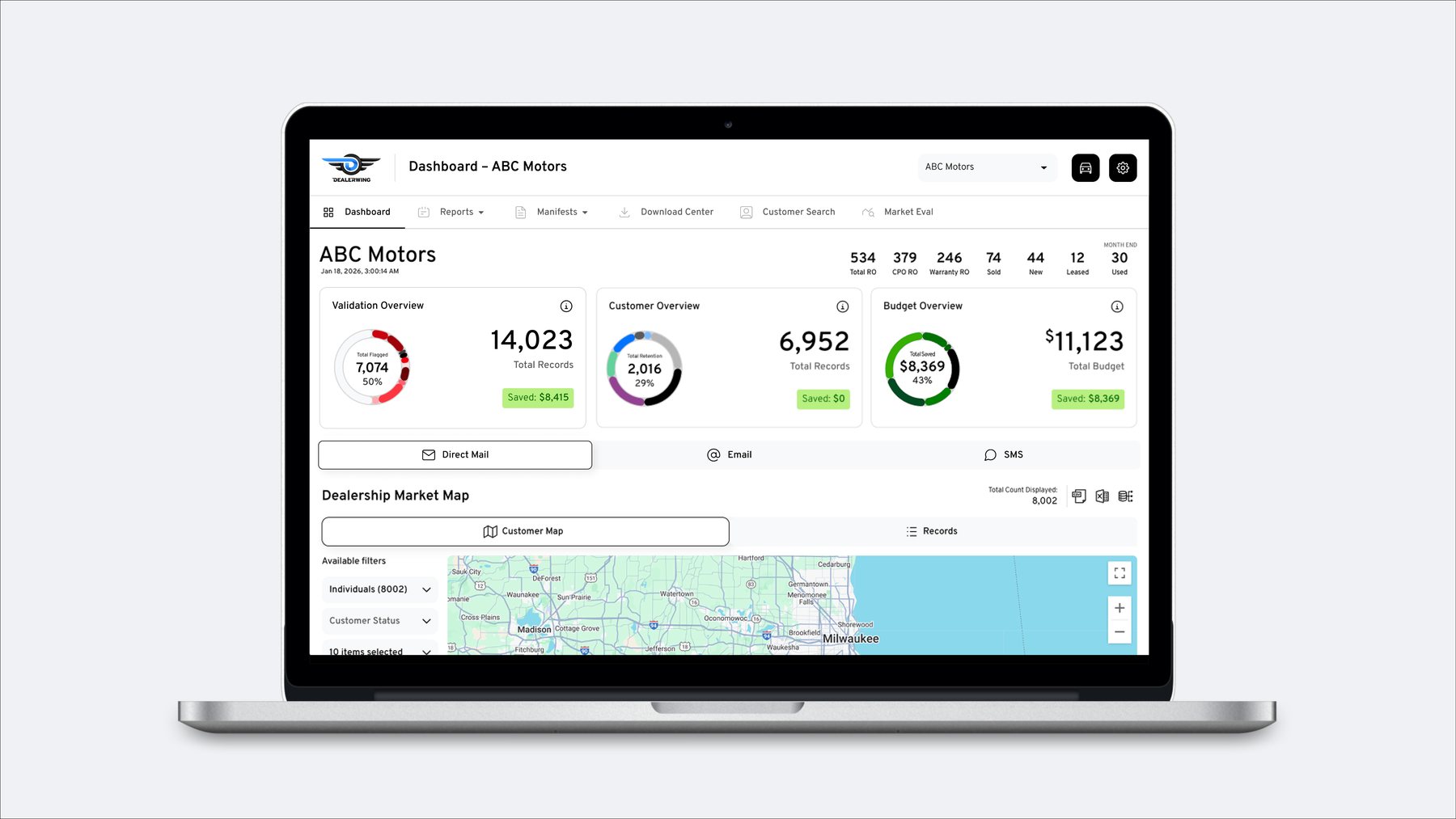
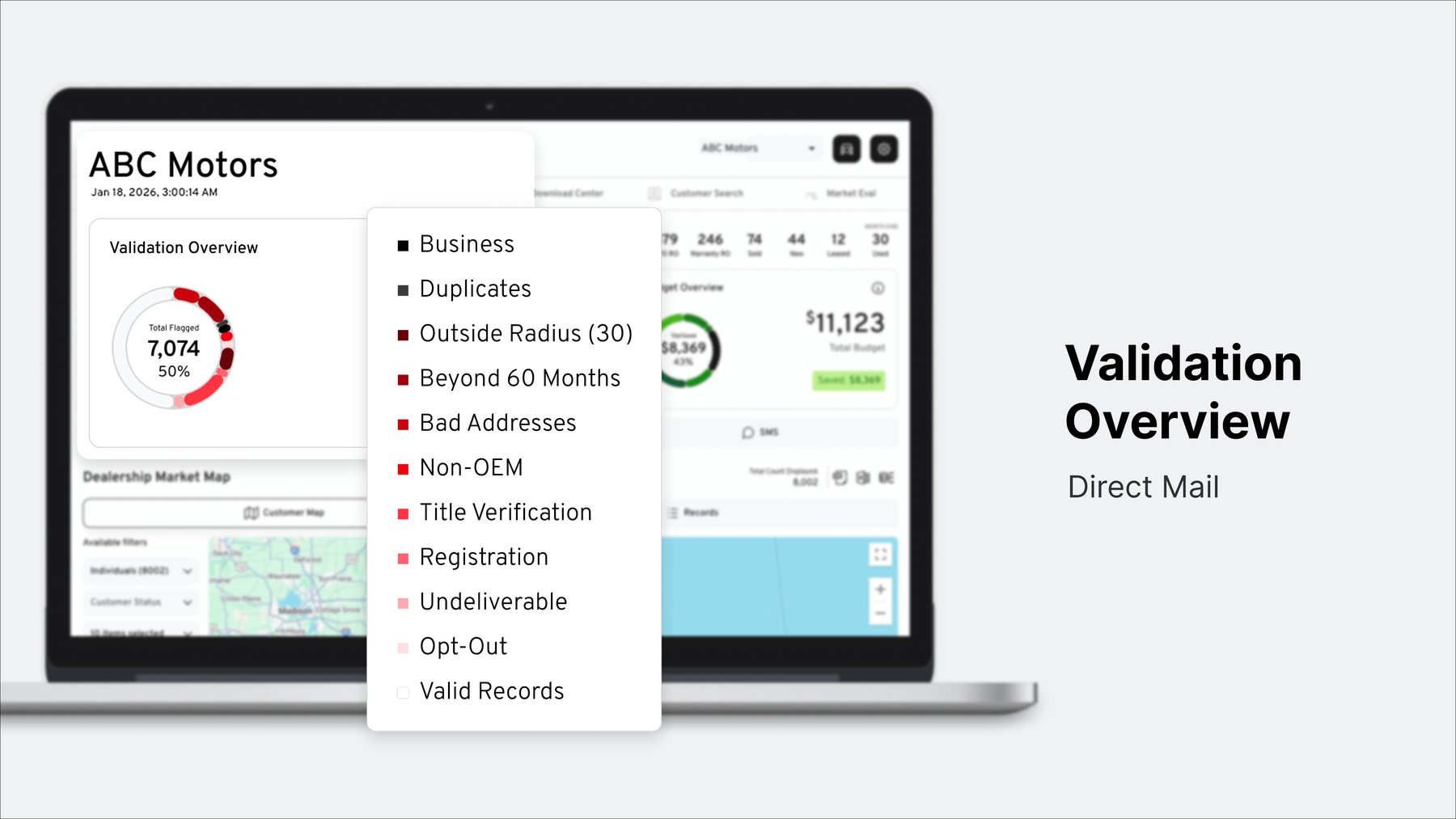
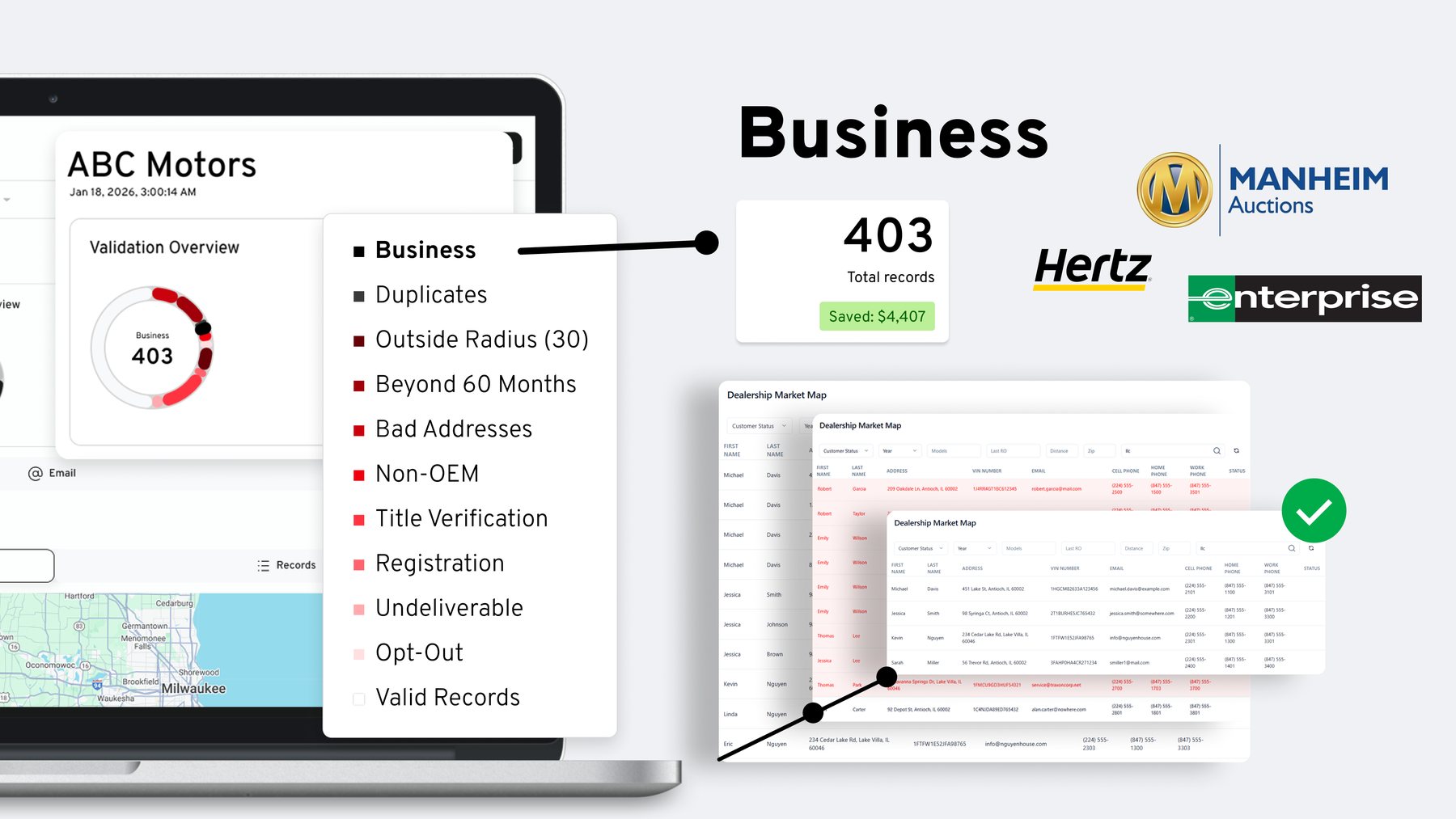
Before any campaign launches, every record passes through the same series of checks. Bad records are flagged — never silently deleted — so you can see exactly what was set aside and why. Follow the process step by step below.
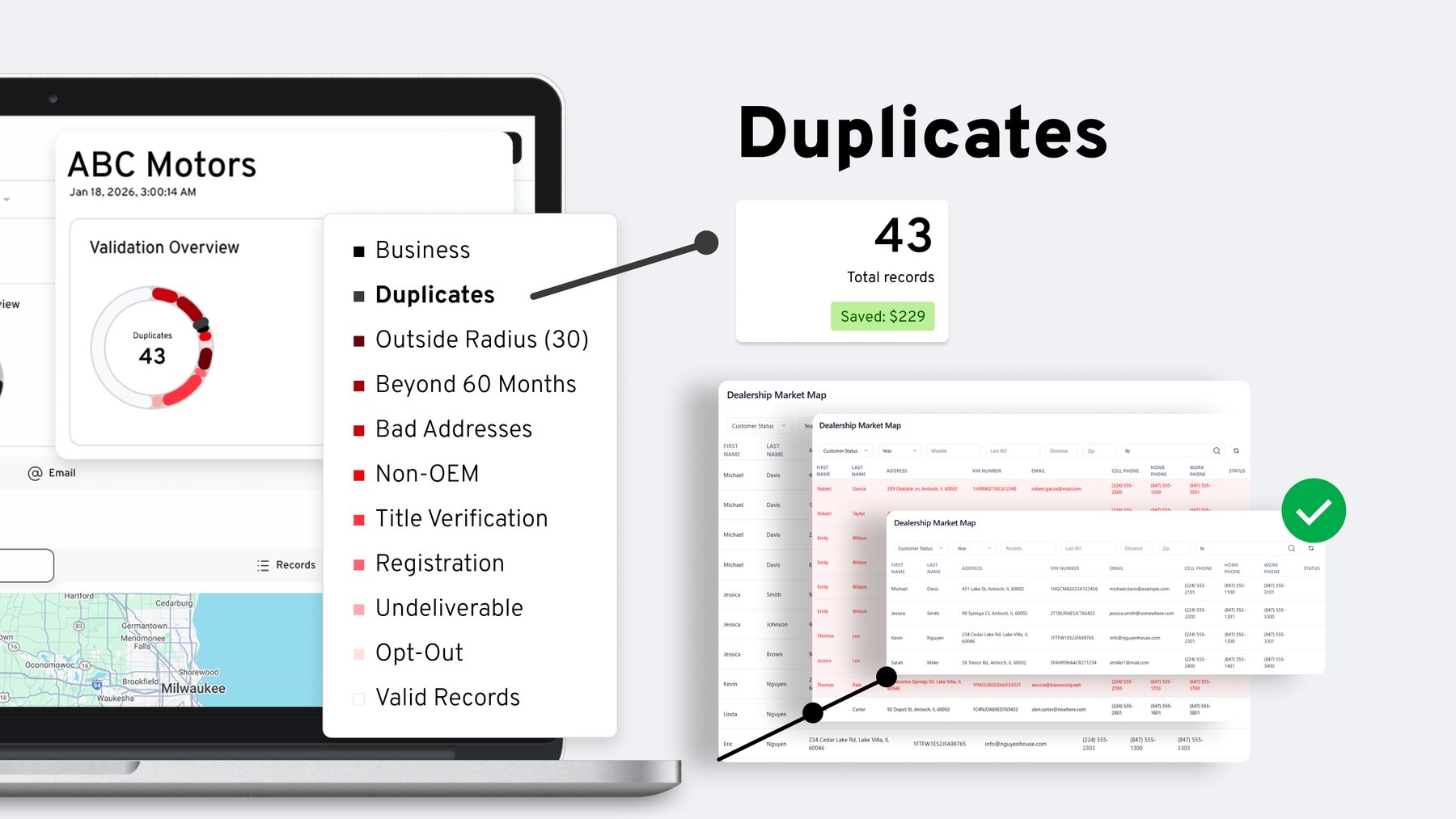
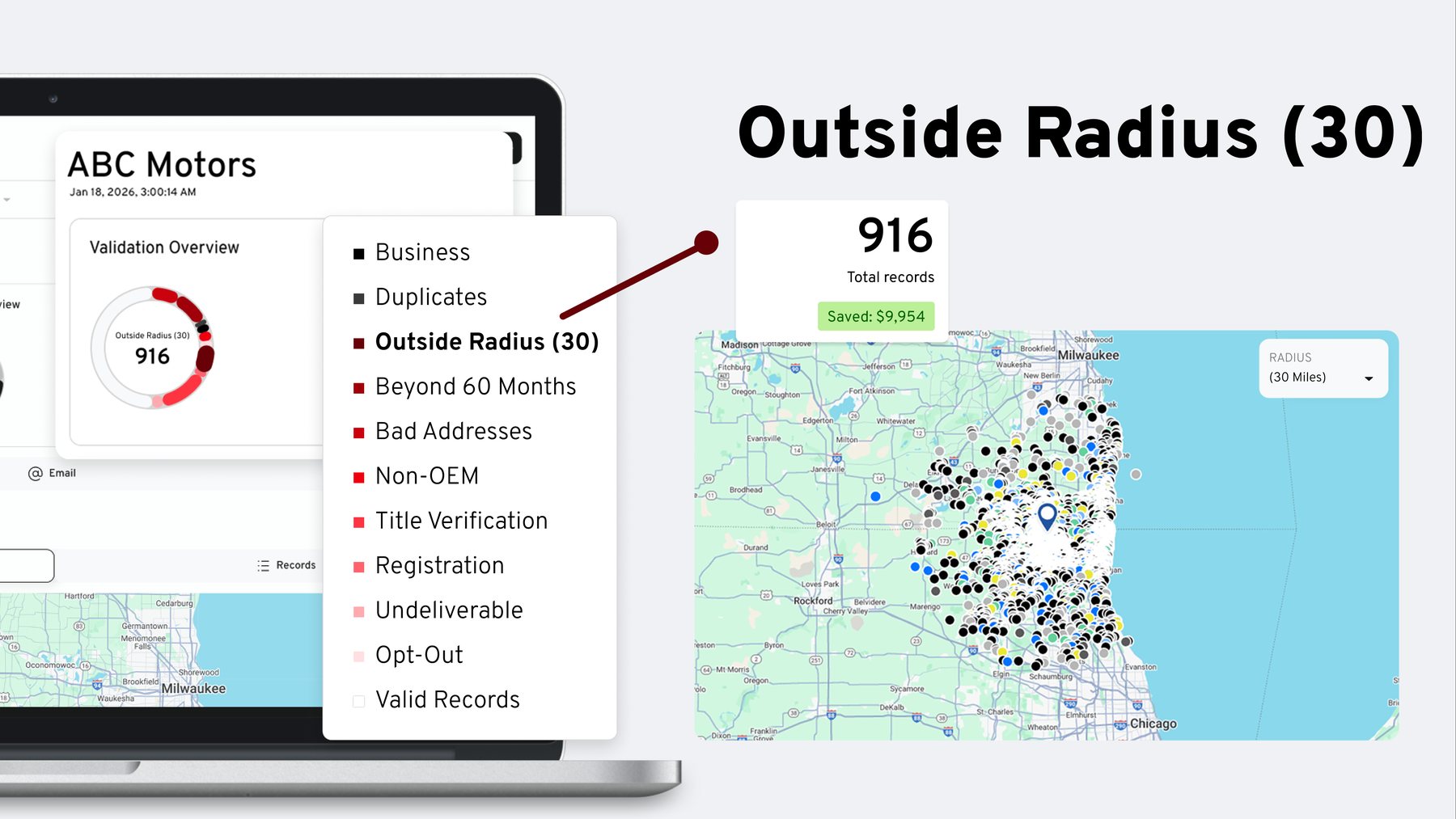
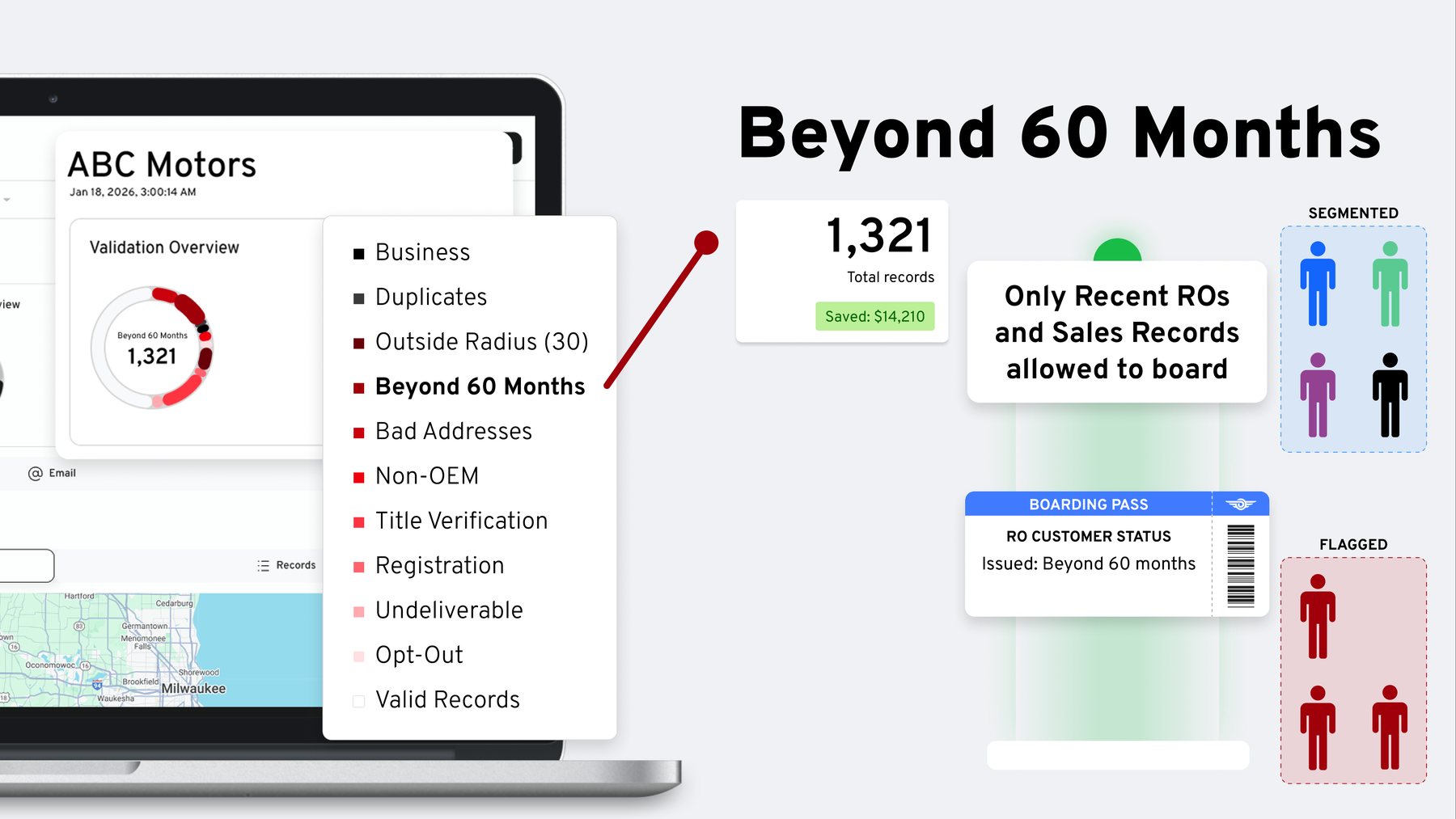
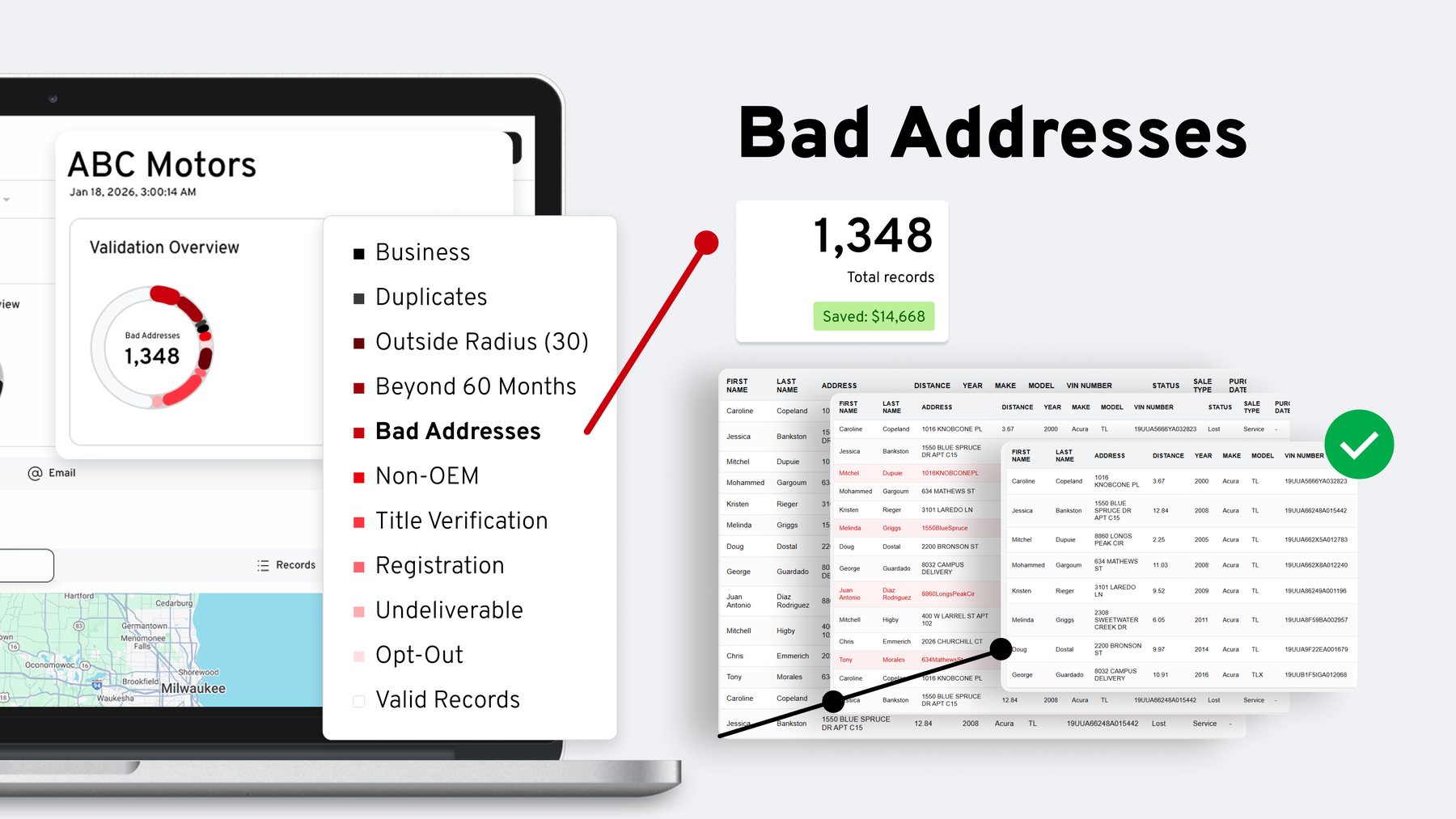
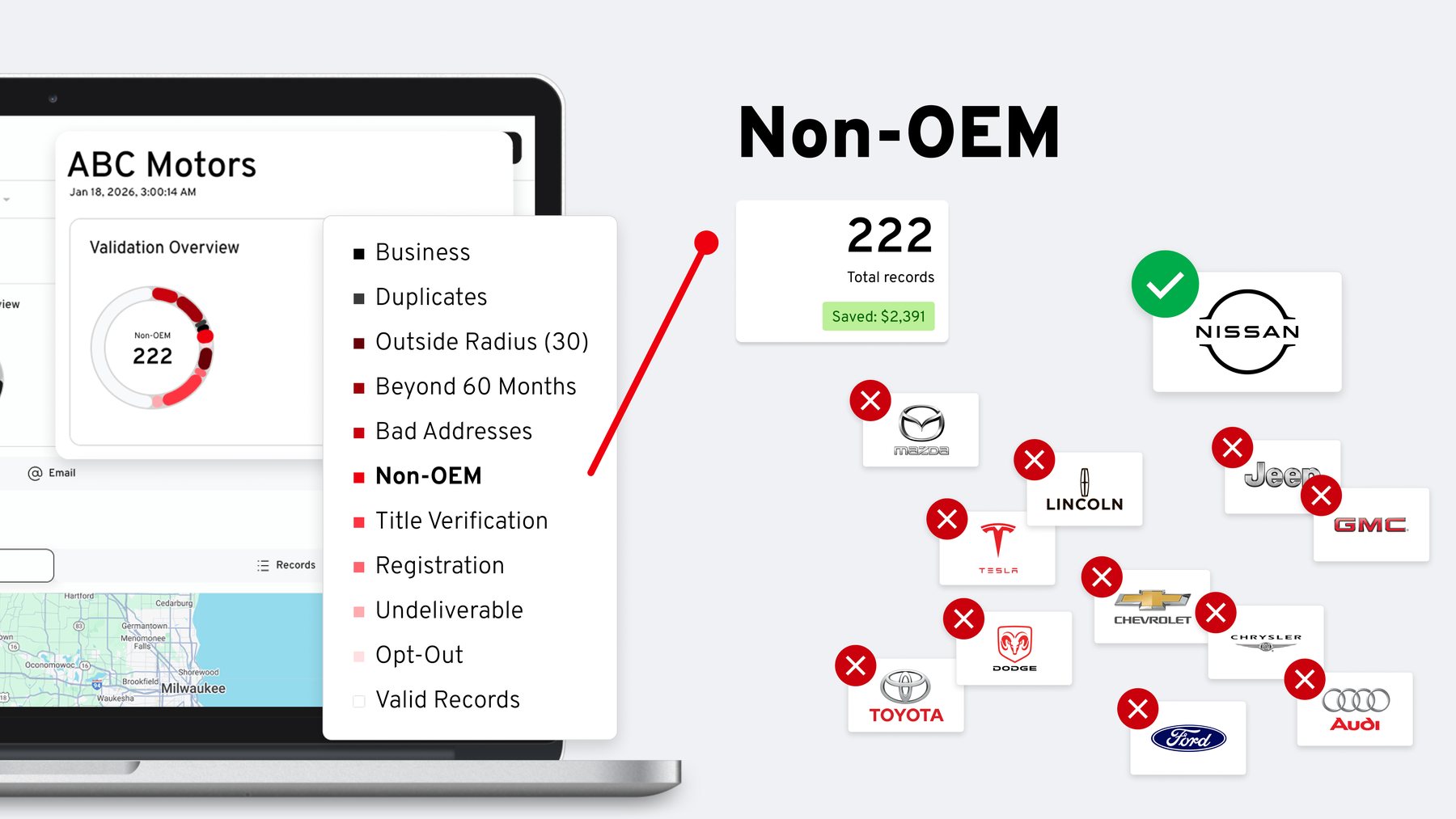
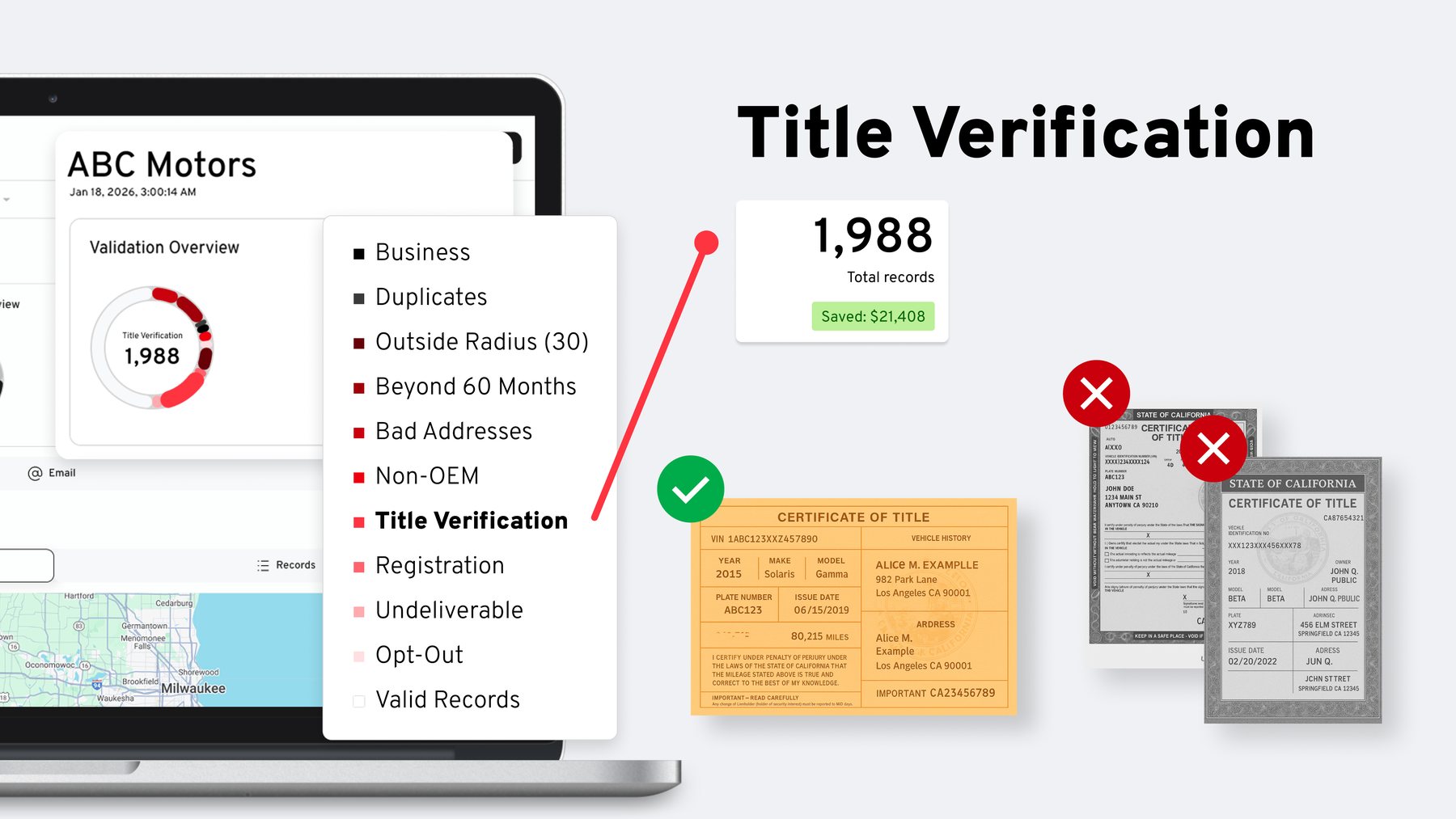
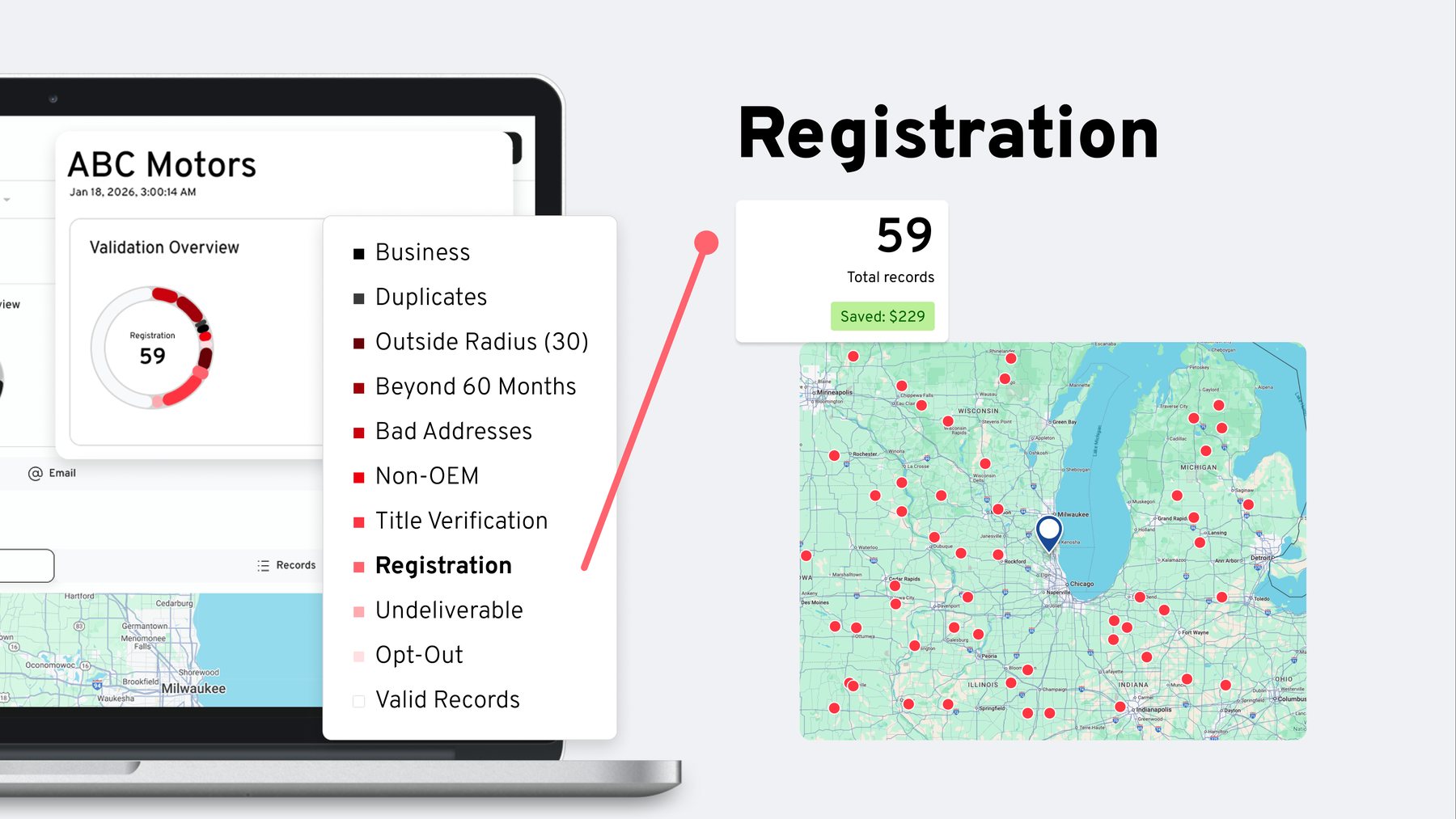
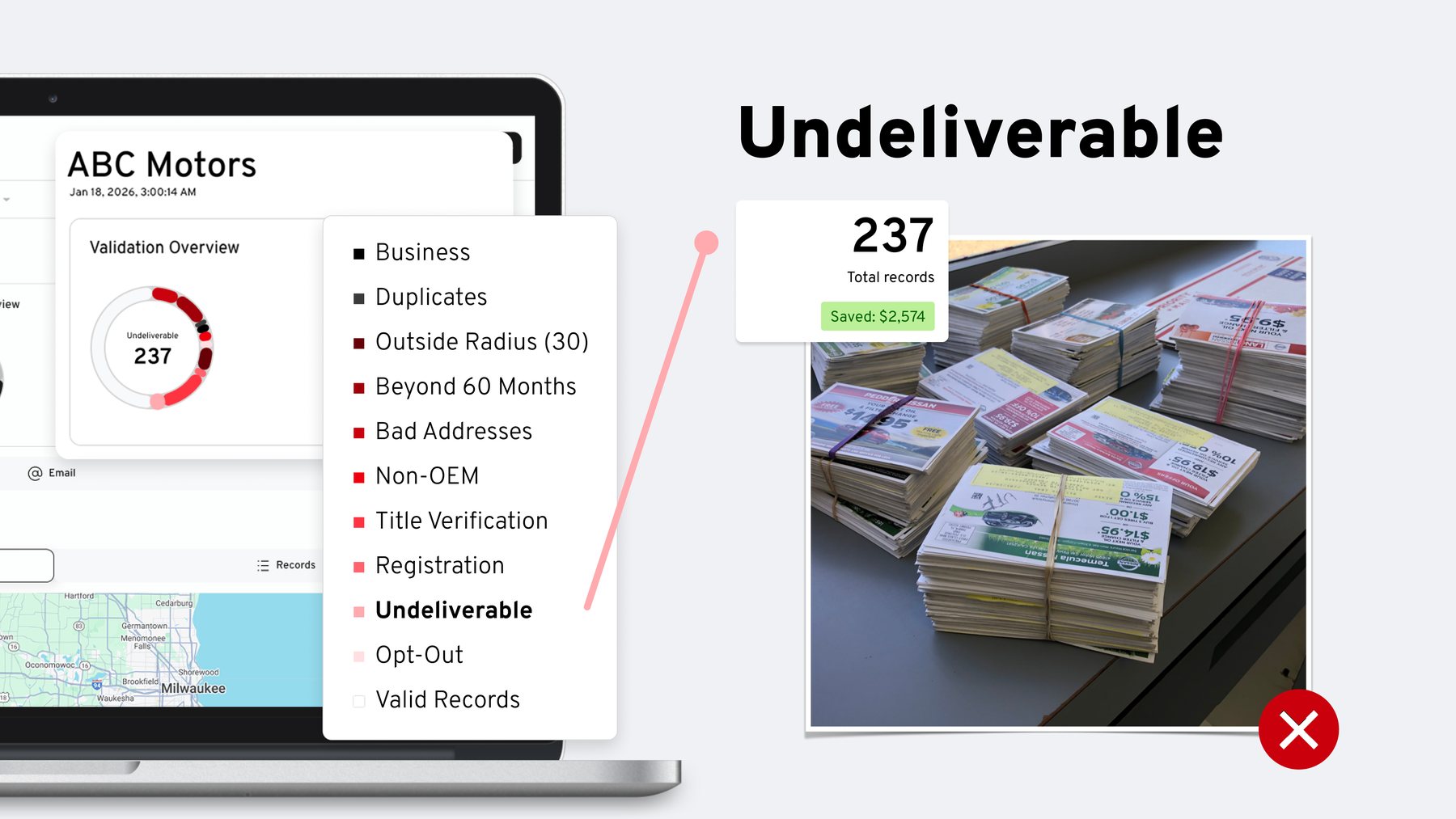
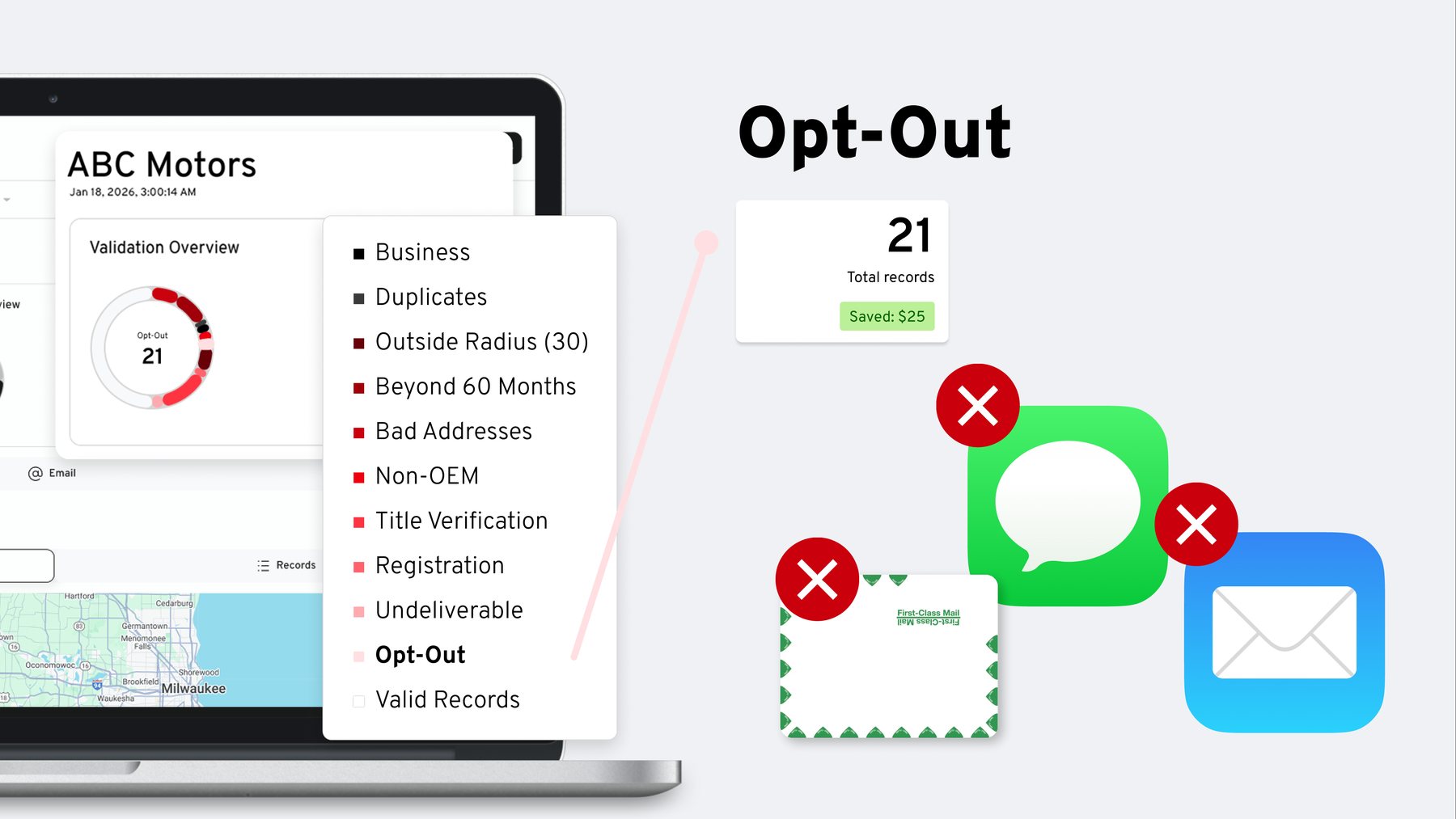
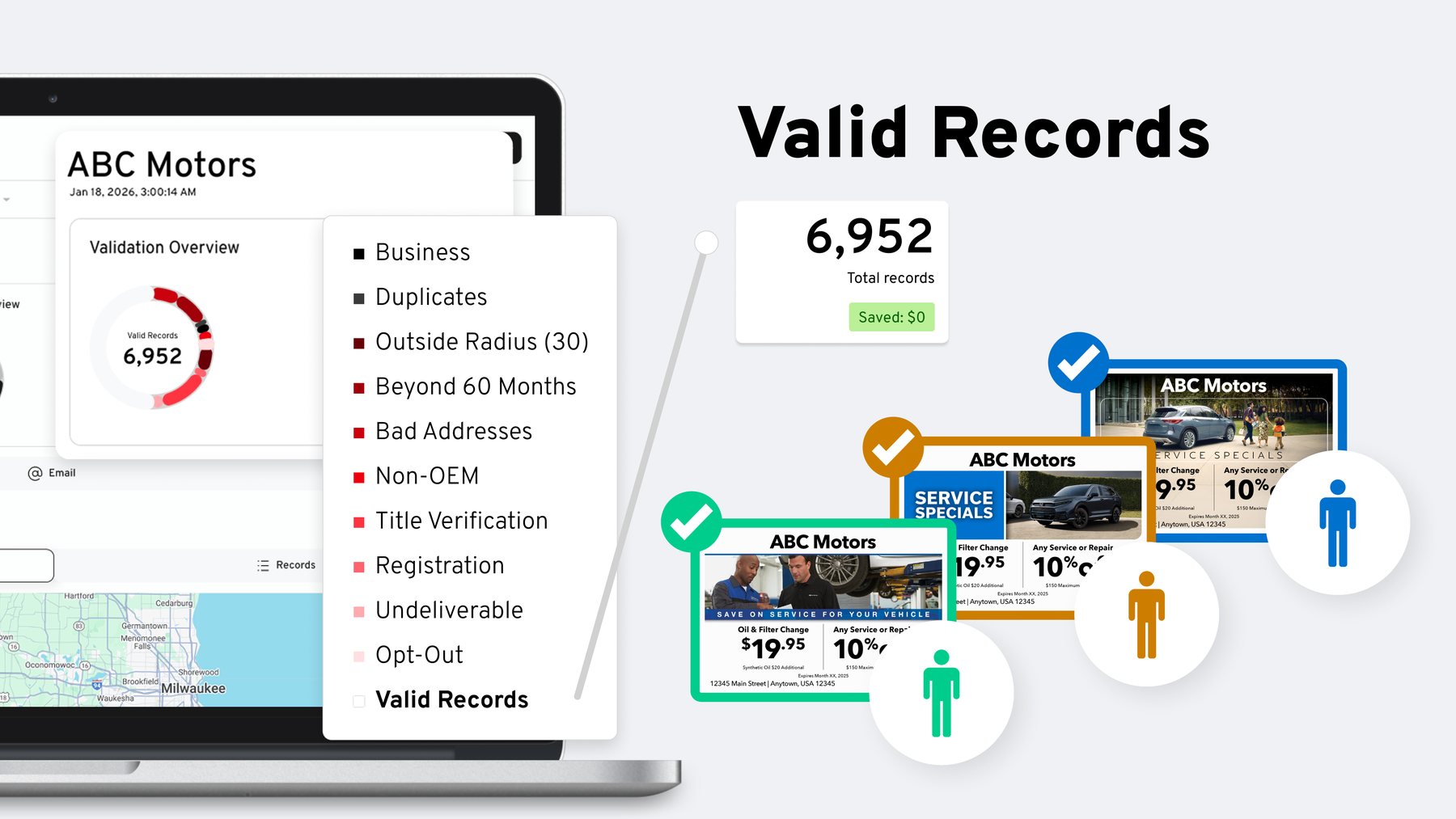
Step 1 of 15 · Collect
Every source, brought together
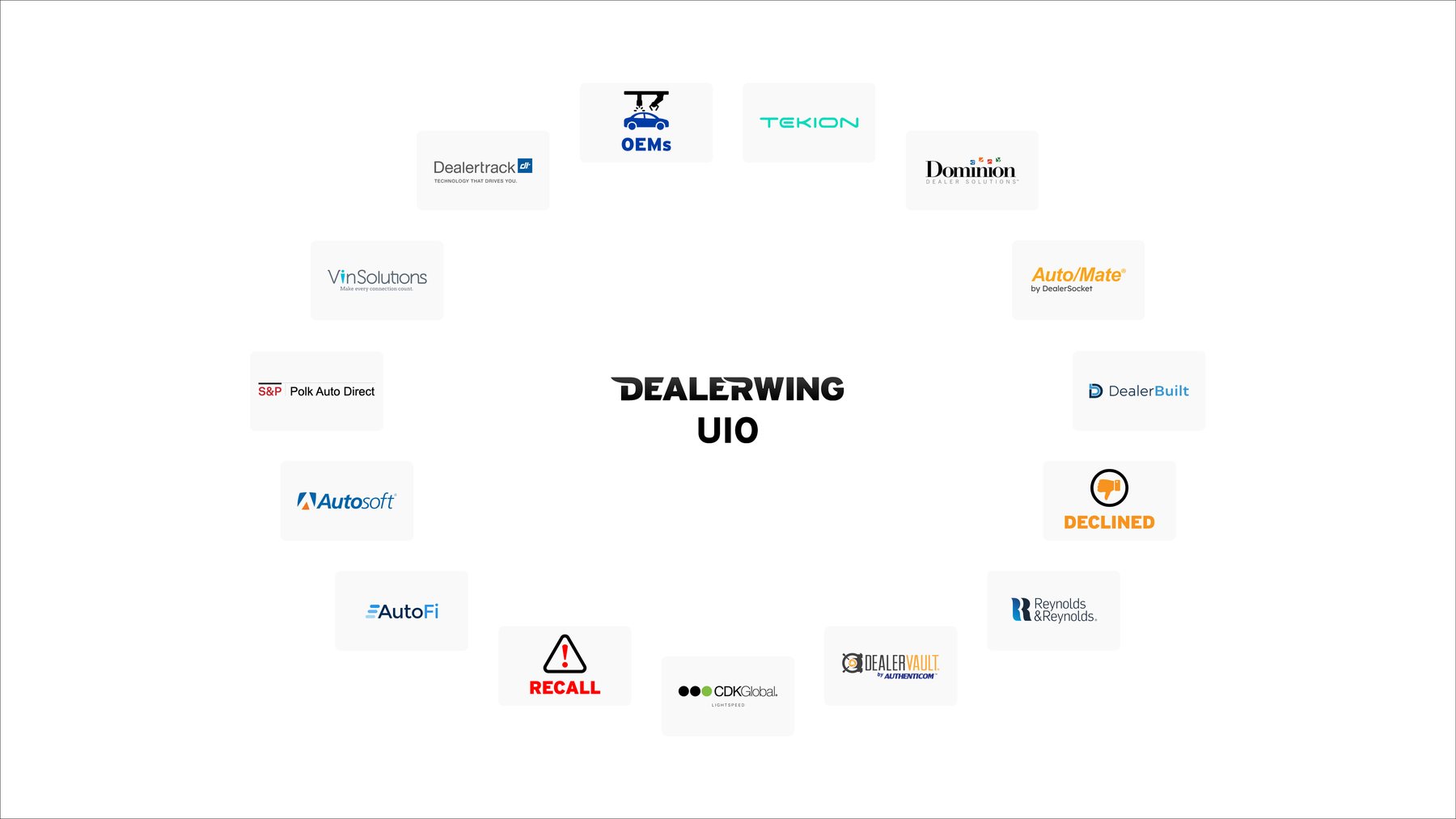
We start by pulling customer, vehicle and transaction data from the systems your dealership already runs on — DMS platforms, CRMs, OEM programs, recall and declined-service feeds, and third-party data partners. Each source sees part of the customer; none of them sees all of it.
Sample dealership data shown for illustration; counts and savings vary by dealership and campaign.
Introducing the Dealerwing Customer Profile
One Customer. One Identity. A More Complete Picture.
Your DMS knows service history. Your CRM knows sales interactions. Your OEM knows vehicle information. Your marketing platforms know campaign engagement. No single system necessarily knows the whole customer.
The Dealerwing Customer Profile represents a resolved customer identity, connecting verified records, vehicles, relationships, transactions and interactions into one actionable customer profile.
The same resolved identity then informs audience building, campaign execution, attribution and future optimization, so duplicate or inappropriate communications drop and new sales and service opportunities surface.
One connected customer identity. More intelligent decisions at every step.
Dealerwing AI
Validation · Matching · Identity resolution · Relationship intelligence
Customer Profile
One resolved customer
Select an attribute to see how it connects.
The CDP conundrum
Connecting Bad Data Doesn't Make It Good Data.
Customer Data Platforms promise a single source of truth by bringing information from multiple systems into one place. But what happens when none of the original sources agrees on the truth?
Dealership systems often use different customer identifiers, data formats and definitions of success. A CDP may ingest that information without permission to correct the original records, so errors keep entering the ecosystem.
The question isn't whether dealers need a CDP. It's whether the data entering it is accurate, connected and trustworthy enough to support the decisions dealers expect it to make. Dealerwing begins with the customer identity, whatever other technology the dealership uses.
The industry is focused on connecting its data. Dealerwing is focused on making that data worth connecting.
DMS · CRM · OEM · Vendors
CDP · centralized data
Conflicting identities and definitions can persist
- Inconsistent standards
- Proprietary data structures and definitions don't become consistent just because feeds are combined.
- Conflicting identities
- Deciding which records belong together—and which must stay separate—takes real identity resolution.
- Limited control over sources
- Without write-back to the DMS or vendor platforms, errors keep entering the ecosystem.
- Inconsistent attribution
- Vendors define conversions, windows and retention differently; centralizing results doesn't make them comparable.
The bottom line
Better Data. Better Decisions. Better Results.
Every marketing dollar depends on the quality of the data behind it. When you know who your customers are, what they drive, how they interact with your dealership and which marketing influences their behavior, you can invest with confidence.
Dealerwing combines automotive marketing expertise, advanced data hygiene, AI-assisted identity resolution and customer intelligence to move dealers beyond disconnected records and unreliable reporting.
Because the goal isn't simply to have more data. It's to know more about your customers—and turn that knowledge into measurable business results.
Stop marketing to records. Start understanding customers.
Data Quality Assessment
Discover What's Hiding in Your Dealership Data
- Duplicate identities across systems
- Outdated vehicle relationships
- Invalid or unverifiable contact information
- Records ready to resolve into a complete customer
FAQ
Common questions
How is identity resolution different from basic data cleaning?
Basic cleaning fixes formatting and obvious typos. Identity resolution links records across systems that represent the same household or vehicle, even when they look different on the surface, and scores how reliable each contact method is.
Will this work with our specific DMS?
We work with all major dealership DMS platforms and OEM data feeds. If we have not connected to yours before, we build the connector during onboarding.
How long does the initial resolution take?
Most dealers see an initial scorecard within 2 to 3 business days of providing a data sample, with full resolution completed before the first campaign launches.
Do we lose any customer history in the merge?
No. Merging combines history rather than discarding it, so a resolved record carries the full service and campaign history from every source it was built from.
What happens to records that can't be confidently matched?
Low-confidence records are flagged rather than forced into a merge. You can see exactly which records were left separate and why, instead of a black-box result.
Does this replace our CRM?
No. Identity resolution feeds cleaner, resolved records into whatever CRM or DMS you already run. It is a layer underneath, not a replacement system.
Is our data shared with other dealers or brokers?
No. Your resolved data stays within your Data Access Agreement and is used only for your programs unless you explicitly approve outside enrichment.